

Benefits of revenue cycle management: Boost cash flow and reduce denials
Are you staring at shrinking margins and tangled in billing complexities? For independent and specialty practices, Revenue Cycle Management (RCM) isn’t just a back-office chore—it’s the financial engine that keeps the lights on and fuels growth.
The core benefits bubble up to three critical outcomes: accelerated cash flow, far fewer claim denials, and a genuinely better patient experience.
The 3 Pillars of a Healthy Revenue Cycle
Think of RCM as your practice’s “financial circulatory system.” It’s responsible for the healthy flow of cash, starting the moment a patient books an appointment and ending only when the final payment lands in your bank account. Without a strong system, this flow gets sluggish, clogged by errors, delays, and administrative headaches that drain your resources and your team’s morale.
A well-oiled RCM strategy clears every potential bottleneck.
For many practices, especially in specialties like cardiology or behavioral health, trying to manage this cycle internally is a massive undertaking. The sheer complexity of coding, ever-changing payer rules, and patient billing can quickly overwhelm even the best teams, leading to lost revenue and frustration. This is why a huge number of practices are turning to dedicated RCM partners.
The proof is in the numbers. The U.S. RCM market was valued at a staggering USD 172.24 billion in 2024 and is projected to climb even higher, signaling a major shift in how practices approach their financial health. You can read the full research about RCM market growth from Grandview Research to see just how significant this trend is.
A strong RCM strategy is built on three pillars that work together to create a resilient financial foundation for your practice.
Pillar 1: Accelerate Your Cash Flow
This is about closing the gap between providing care and getting paid. A faster, more predictable revenue stream stabilizes your income, making it easier to manage payroll, invest in new equipment, and plan for the future with confidence.
Pillar 2: Stop Denials Before They Happen
Denials are a slow, expensive drain on your practice. The key isn’t just getting better at appealing them—it’s preventing them in the first place. Proactively catching errors before a claim goes out the door sidesteps the entire costly cycle of rejections, corrections, and resubmissions.
Pillar 3: Improve the Patient Experience
Let’s be honest: no patient enjoys dealing with confusing medical bills. When billing is clear, transparent, and easy to understand, it reduces patient anxiety and builds trust. A smooth financial experience is a crucial—and often overlooked—part of their overall satisfaction with your practice.
This diagram shows how these three pillars are interconnected, creating a healthy financial ecosystem for your practice.
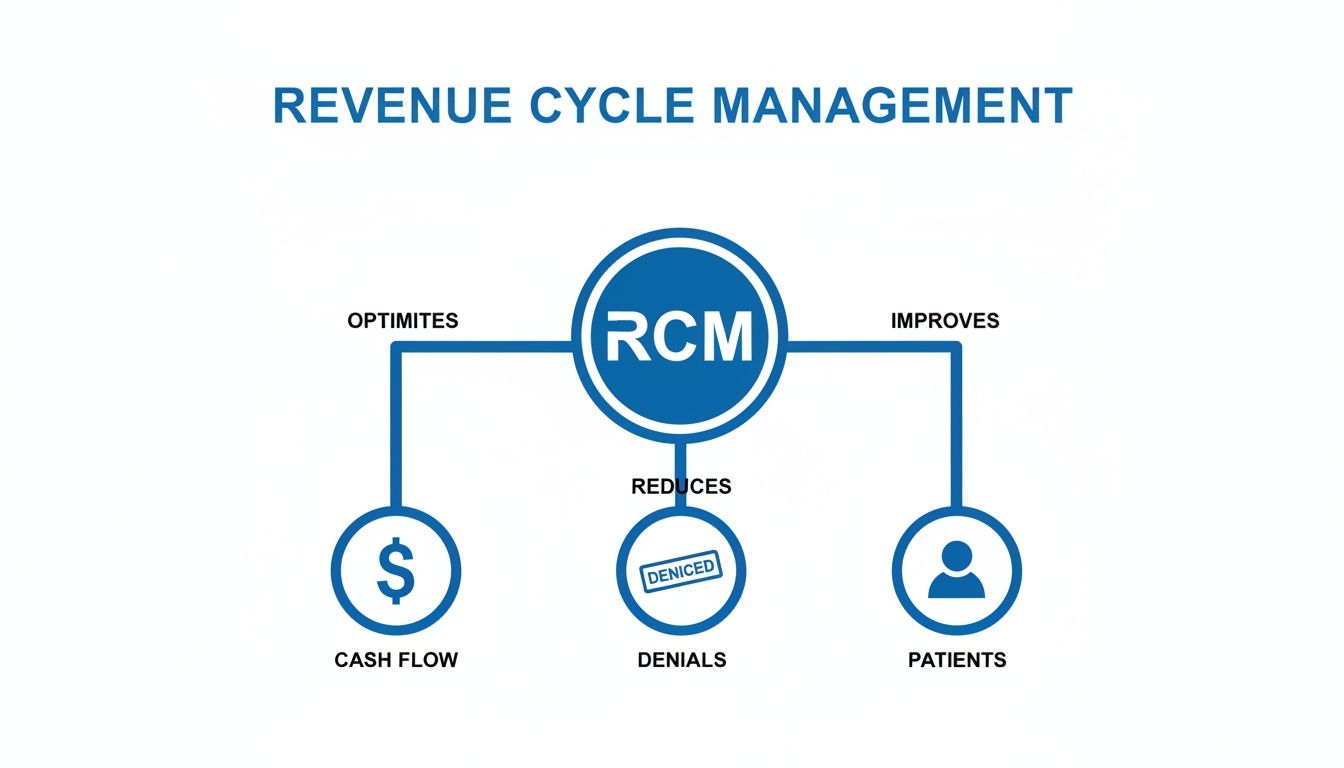
As you can see, a central RCM strategy doesn’t just improve one thing; it has a direct, positive impact on your practice’s most critical financial and operational outcomes.
To make it even clearer, here’s a quick summary of what a robust RCM system brings to the table.
Key RCM Benefits at a Glance
| Benefit | Impact on Your Practice |
|---|---|
| Increased Revenue & Cash Flow | Get paid faster and more predictably, improving financial stability and enabling growth. |
| Reduced Claim Denials | Proactively fix errors to achieve a higher first-pass payment rate, saving time and money. |
| Enhanced Patient Satisfaction | Provide clear, transparent billing that reduces confusion and improves the patient financial journey. |
| Improved Staff Efficiency | Free your team from chasing down payments so they can focus on patient care and higher-value tasks. |
| Stronger Compliance | Stay ahead of complex payer and government regulations, reducing the risk of costly audits and penalties. |
Ultimately, these benefits work together. When your team isn’t bogged down by billing issues and your cash flow is healthy, you’re better positioned to deliver the excellent patient care that defines your practice.
Turn Your Services into Cash, Faster
One of the first things a practice notices after fixing its revenue cycle is how much faster cash starts hitting the bank. In any medical practice, cash flow is the lifeblood. It’s what makes payroll, pays for that new piece of equipment, and funds future growth. When payments trickle in unpredictably, it puts a huge strain on your entire operation.
Think of an inefficient billing process like a leaky bucket. Every manual error, every delayed claim, every unresolved patient balance is a small hole where your hard-earned revenue drips away. You might not notice the individual drops, but over time, they add up, leaving you financially vulnerable and always playing catch-up. A messy, disconnected system creates a painful lag between doing the work and getting paid for it.
Plugging the Leaks with a Methodical Process
A well-oiled RCM system acts as the ultimate sealant for that leaky bucket. It doesn’t just patch one hole; it methodically inspects and plugs every potential leak, from the moment a patient schedules an appointment until their final payment is posted.
For instance, simply automating insurance eligibility verification before a patient arrives for their visit knocks out one of the most common reasons for claim denials right from the start. This single proactive step ensures the claim goes to the right payer with the right information—a fundamental building block of a healthy revenue cycle.
Likewise, an optimized process makes sure claims are coded correctly and submitted almost immediately after a service is rendered. This cuts down on the time claims spend just sitting in a queue, dramatically speeding up the entire payment cycle. Even shaving a few days off your submission time can have a massive impact on your practice’s cash position over the course of a year.
The entire point of a strong RCM system is to shorten the payment cycle. By shrinking the number of days your revenue is tied up in Accounts Receivable (AR), you convert your services into usable capital much more quickly and reliably.
Gaining Control with Real-Time Visibility
This is where modern RCM really changes the game. Instead of digging through outdated reports weeks after the fact, you get a live, real-time view of your practice’s financial pulse. You can instantly see the exact status of your Accounts Receivable and stop guessing about your financial health. If you’re tired of flying blind, it’s worth exploring proven strategies for Accounts Receivable (AR) management.
This level of transparency gives you the power to:
- Track Reimbursement Velocity: See exactly how long it takes for different payers to process and pay your claims. Is Aetna taking 45 days while Cigna pays in 15? Now you know.
- Identify Bottlenecks Instantly: Pinpoint precisely where claims are getting stuck. Is it a specific insurer, a certain procedure code, or a recurring internal error?
- Achieve Higher Collection Rates: With proactive, data-driven follow-up and denial management, a much higher percentage of your submitted claims actually get paid in full.
This shift from a reactive to a proactive financial stance is huge. It turns an unpredictable, lumpy income stream into a steady, reliable cash flow you can actually build your business on.
Drastically Reduce Claim Denials and Rejections
Claim denials aren’t just an administrative headache. They’re a direct, unfiltered drain on your practice’s revenue. Every time a claim gets denied, your team has to stop what they’re doing and spend time they don’t have investigating, correcting, and resubmitting work you’ve already done—all for zero new income.
It’s a frustrating cycle of chasing money you should have already been paid. A well-oiled RCM process is designed to break that cycle for good.
The biggest shift is moving from a reactive mindset to a proactive one. Instead of just getting good at fighting denials after they happen, the real goal is to stop them from ever showing up in the first place. This starts with understanding the difference between a simple rejection (usually a quick fix for a typo) and a full-blown denial, which kicks off a much more complicated and time-consuming appeal.

From Denial Management to Denial Prevention
A proactive RCM strategy works like a quality control system for every single claim. Think of it as a series of checkpoints that scrutinize claims before they ever go out the door to payers. That front-end diligence is where you get your time back and protect your cash flow.
This system automatically flags the common, preventable errors that cause most denials, such as:
- Coding Errors: Using the wrong CPT, ICD-10, or modifier that doesn’t match up with a specific payer’s rules.
- Missing Authorizations: Forgetting to secure prior authorization for a procedure or service that requires it.
- Eligibility Issues: Sending a claim for a patient whose insurance coverage has changed or lapsed.
By catching these slip-ups upfront, your practice can hit a much higher clean claim rate. That means more claims get accepted and paid on the very first try, which dramatically cuts down on the administrative grind for your staff and protects your bottom line.
How a Dedicated RCM Partner Shields Your Revenue
For specialty practices across the U.S., denials and slow payments are huge sources of stress. We’ve seen that top-performing clinics using a smart RCM strategy can cut their first-pass denials by 15-20% while also trimming their days in A/R. This is critical when you consider that over 40% of providers are stuck waiting two months or longer for payment—a cash flow crunch that hits independent cardiology and mental health practices particularly hard.
A dedicated RCM partner doesn’t just submit claims; it builds a defensive wall around your revenue. By automating verification and applying rigorous pre-submission audits, it ensures each claim has the highest possible chance of success.
This methodical approach finally gets your practice out of the endless loop of denial management. The benefit is crystal clear—fewer denials mean faster payments, less wasted time, and a much more stable financial foundation. If you’re tired of watching revenue leak out the door, the first step is understanding what goes into effective denial management services.
Enhance the Patient Financial Experience
A great clinical outcome can be completely undone by a confusing, frustrating billing process. For patients, that financial journey is a huge part of their overall experience, yet it’s often where practices unknowingly create friction and erode trust. One of the most powerful benefits of a solid revenue cycle management system is its ability to turn this interaction from a point of stress into a source of confidence.
Most patient frustration boils down to a lack of clarity. Surprise bills, statements filled with jargon, and no upfront cost estimates leave them feeling anxious and suspicious. This financial uncertainty doesn’t just sour their opinion of your practice; it makes them far less likely to pay their bills on time. A modern RCM system tackles these pain points head-on.

From Confusion to Clarity
The heart of a better patient financial experience is transparency. An optimized RCM process builds this in at every step, starting long before a patient ever sees a bill.
For example, a robust system automates insurance eligibility verification the moment an appointment is booked. This simple, proactive step confirms coverage details upfront, preventing the single most common cause of surprise bills down the line. It lays the groundwork for a predictable, no-drama financial interaction.
This also lets your team provide patients with a good-faith estimate of their out-of-pocket costs. When people understand their financial responsibility from the start, it removes the fear of the unknown and lets them plan. This builds a foundation of trust that’s essential for keeping patients long-term.
A transparent billing process does more than just improve patient satisfaction; it directly impacts your bottom line. Patients who understand their bills and feel respected are significantly more likely to pay promptly and in full.
Making Payments Simple and Accessible
Finally, a modern RCM system makes the act of paying simple. Instead of forcing patients to mail paper checks or call during business hours, you can offer convenient and secure online payment portals.
This approach gives everyone what they want:
- Convenience: Patients can pay their bills 24/7 from any device, whenever it works for them.
- Clarity: Digital statements are often easier to read and understand than cramped, confusing paper forms.
- Security: Reputable systems provide secure payment options that protect sensitive patient data.
By making the entire financial process less intimidating and more user-friendly, you do more than just collect revenue. You build stronger patient relationships, encourage timely payments, and earn the kind of positive online reviews that boost your practice’s reputation and bring new patients through the door.
Ensure Bulletproof Compliance and Security
In healthcare, compliance isn’t just a nice-to-have; it’s a non-negotiable part of staying in business. The risks that come with improper billing or a HIPAA violation are massive—we’re talking about staggering fines, a ruined reputation, and in the worst cases, losing your license to practice.
One of the most critical benefits of a solid revenue cycle management system is that it acts as your practice’s compliance shield. It’s a proactive defense against the financial and legal threats that are, unfortunately, part of the job.

Staying Ahead of Constant Change
Let’s be honest: navigating the maze of healthcare regulations feels like a full-time job in itself. Payer rules and government mandates are in a constant state of flux. An expert RCM team lives and breathes these changes, keeping up with the latest coding updates, billing requirements, and compliance deadlines so you don’t have to.
This expertise is your first and best line of defense. It ensures your claims are not only optimized to get paid but are also built on a foundation of regulatory integrity. You get to sleep at night knowing a team of specialists is safeguarding both your practice’s financial health and its legal standing. If you’re handling things in-house, you might be surprised to learn about the hidden compliance risks of DIY billing and how easily they can trip up even careful practices.
Fortifying Patient Data Security
Beyond just billing compliance, protecting sensitive patient health information (PHI) is absolutely paramount. Data breaches are on the rise, and the fallout from a security failure can be devastating for your patients and your practice alike. A professional RCM system isn’t just about sending claims; it’s about locking down sensitive data with enterprise-grade security.
This is where advanced cybersecurity layers, such as our HIPAA VaultOps™, become essential. These systems protect PHI from modern cyber threats, which is why it’s a top priority for any forward-thinking practice.
By entrusting your revenue cycle to a partner with a security-first mindset, you’re not just outsourcing billing. You’re implementing a robust defense system that protects your most valuable asset: your patients’ trust.
This dual focus on clean claims and ironclad data security is a cornerstone of modern RCM, freeing you up to focus completely on what you do best—caring for patients.
Your Next Steps to a Healthier Revenue Cycle
Fixing your revenue cycle is probably the single most powerful decision you can make for the long-term health of your practice. It’s so much more than just “better billing.” Think of it as a strategic move that shores up your financial stability, smooths out your operations, and ultimately frees you up to deliver incredible patient care.
The benefits here aren’t just one-offs; they build on each other.
A systematic approach transforms unpredictable income into a steady, reliable cash flow. It actively stops claim denials before they even happen, saving your team from the soul-crushing grind of chasing down payments. This lets you shift from just managing financial chores to truly leading a resilient, independent practice.
When your RCM is dialed in, everything else just gets easier. Your staff can focus on patients, not paperwork. Your compliance is locked down, protecting you from stressful audits. Most importantly, you gain the financial clarity and peace of mind you need to actually grow.
Chart Your Path to Financial Resilience
The first step to getting better is knowing exactly where you stand right now. The most common pain points we see are often hiding in plain sight, slowly draining revenue and creating work that just shouldn’t be necessary.
Do any of these sound familiar?
- High Denial Rates: Are you constantly reworking and resubmitting claims for things that were preventable from the start?
- Slow Reimbursements: Is your cash flow always feeling tight because you’re waiting forever for payers to pay you?
- Time-Consuming Admin Work: Does your team spend more time on billing tasks than on helping patients?
- Lack of Financial Visibility: Can you get a clear, real-time picture of your practice’s financial health right now, or is it a mystery?
Acknowledging these challenges isn’t a sign you’ve done something wrong—it’s the starting line for building a much stronger financial future. A quick, targeted assessment can pinpoint the specific leaks in your revenue cycle and map out the fastest way to plug them.
Ready to see how a healthier revenue cycle can support your practice? Schedule a complimentary, zero-pressure assessment with our team. This isn’t a sales pitch; it’s a real strategy conversation to pinpoint revenue leaks and define your path to greater financial control.
A Few Common Questions About RCM
Even after seeing how a solid revenue cycle management system works, it’s completely natural to have questions about what a partnership would actually look like for your specific practice. Here are a few of the most common things we hear from independent practice owners wrestling with this decision.
How Quickly Can We Actually See a Difference?
Faster than you might think. A structured, well-managed onboarding process gets the basics right almost immediately. Many practices see a jump in their first-pass claim acceptance rates within the first 30 days. It’s the first sign that front-end errors are already being caught before they turn into denials.
The bigger impacts—like a real drop in your Accounts Receivable (AR) days and a significant reduction in denial rates—usually become obvious within 60 to 90 days. That’s enough time for the new system to get traction, start clearing out old claim issues, and establish a much smoother, more predictable payment rhythm.
Is Outsourcing RCM Even Affordable for a Small or Solo Practice?
Yes, and honestly, it’s almost always more cost-effective than trying to manage it all in-house. Once you add up the true costs—a skilled biller’s salary and benefits, expensive billing software, continuous training, and the chaos caused by staff turnover—a partnership model is incredibly competitive.
But the real ROI isn’t just about cutting costs. It’s about recovering revenue that was slipping through the cracks and getting cash in the door faster. Those gains usually dwarf the service fee, turning what was once a fixed overhead cost into an investment that truly pays for itself.
Do You Really Understand Our Specialty’s Billing Nuances?
This is the most important question you can ask, and it’s where most generic services fall apart. A one-size-fits-all approach to billing is destined to fail specialty practices because it misses the critical details in your coding and payer rules. Your RCM partner must have proven expertise in your specific field.
Here’s what that looks like in the real world:
- For Behavioral Health: It’s about correctly applying codes for different therapy modalities and navigating the tricky rules around session lengths and prior authorizations.
- For Chiropractic: This means accurately using specific subluxation codes and managing the visit limits that different insurance plans impose.
This kind of specialty knowledge isn’t a “nice-to-have”—it’s the core of getting maximum, accurate reimbursement. It’s one of the biggest benefits of having a revenue cycle management strategy built just for your practice.
Ready to see what your practice’s financial health could look like with a partner who gets it? The team at ClaiMed Solutions is here to help you cut down denials, speed up your cash flow, and finally achieve financial clarity. Schedule your complimentary assessment today and find out how our TrustedRCM Method can build a more resilient future for your practice.


